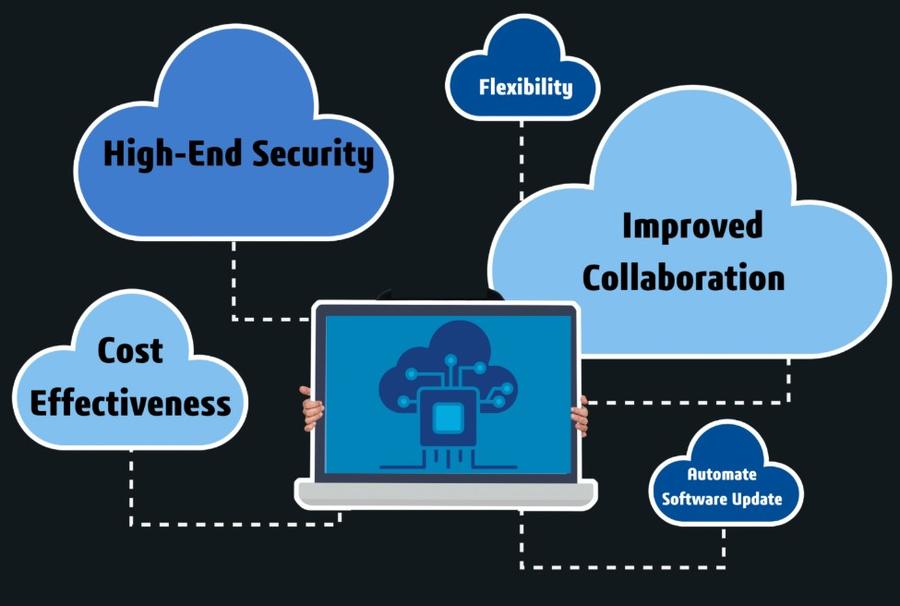
A structured cabling system is not just a set of wires but the foundation of the entire network infrastructure, on which the behaviour, stability and speed of data transmission directly depend. When it comes to network performance, many people tend to think about servers or software, but it is the physical layer that often becomes the hidden limiter, even in environments powered by cloud services UAE.
Losses are inevitable for the signal travelling through the cable. The transmitted data is gradually attenuated as the line length and frequency rise. In addition, there are signal reflections caused by an impedance mismatch, which leads to additional distortion. The result is reduced signal integrity and sometimes transmission errors.
Interference plays an even more insidious role. Crosstalk, especially between adjacent cables, can significantly degrade channel quality. Electromagnetic interference from external sources increases the problem by reducing the signal-to-noise ratio. The lower this indicator, the higher the probability of packet retransmission, which means that the delay increases.
In this case, the delay is not limited only by the propagation time of the signal. Jitter occurs, delay variations appear, and the network begins to behave erratically. This is critical for real-time applications. Even small fluctuations can disrupt the data flow.
The type of cable also matters. Copper solutions are limited in speed and sensitive to interference, whereas fibre provides significantly higher throughput and stability. But even the most modern cable will not save the situation in case of a bad installation, especially when supporting critical systems like data backup services Dubai that require consistent and uninterrupted connectivity.
The quality of the installation is a different story. Too strong bends, incorrect termination, and violation of the permissible length – all this gradually degrades the channel. Errors at this stage are rarely immediately noticeable, but over time they turn into systemic problems.
Do not forget about the management of the cable system. Chaotic installation and lack of labelling and documentation complicate maintenance and increase downtime in case of failures. In a well-organised system, each line is predictable, accessible, and controlled.
Network reliability is directly related to the quality of the cable infrastructure. Failure of one segment can affect entire sections of the system. Therefore, redundancy and a well-thought-out topology become a necessity, not an option.
Scalability is another important aspect. Modern networks are growing rapidly, and the cable system must be prepared for increased load. If there is no initial reserve in terms of characteristics, the upgrade will cost significantly more.
Ultimately, a structured cabling system is not just a physical transmission medium. It is a complex, multi-layered ecosystem where every detail affects the final performance. To ignore it is to deliberately place limits on the future of the network.

I am a career coach with more than 5 years of experience, helping job seekers navigate their job search through individual coaching, webinars and events.